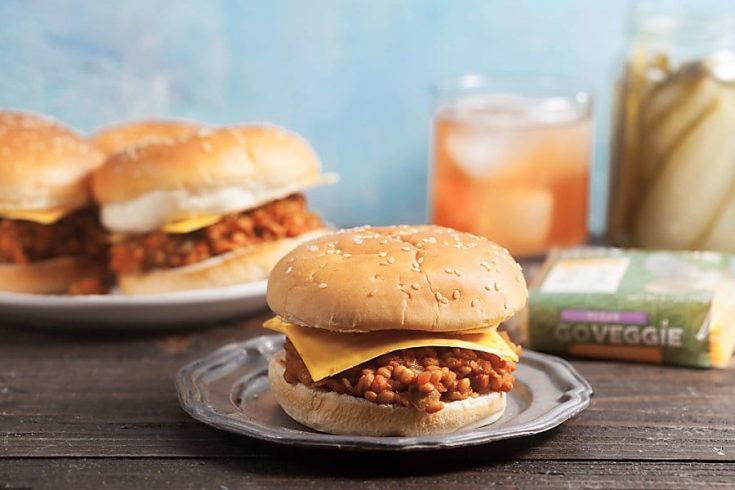
BBQ Lentil Sloppy Joes

Servings: 4
Preheat: 0
Prep Time: 
Source: https://www.healthy-delicious.com/wp-json/mv-create/v1/creations/497/print

Quick homemade barbecue sauce gives these lentil sloppy joes a ton of flavor. You can also substitute 1 1/2 cups of your favorite bottled barbecue sauce plus 1/4 cup water.

Ingredients: 

1 cup green or brown lentils
1 tablespoon olive oil
1 onion, diced
1 green bell pepper, diced
3/4 cup ketchup
1/4 cup apple cider vinegar
1/4 cup water
2 tablespoons maple syrup
1 tablespoon Worcestershire sauce*
1 tablespoon Dijon mustard
1/4 teaspoon cayenne pepper

Directions: 

Add the lentils and two cups of water to a small saucepan. Bring to a boil, then reduce heat to a simmer. Cover and cook 25 minutes, or until the water is absorbed and the lentils begin to soften.

Meanwhile, heat the oil in another pan. Add the onion and bell pepper and cook, stirring occasionally, for 5 minutes, or until softened. add the ketchup, vinegar, water, syrup, Worcestershire sauce, mustard, and cayenne pepper. Season with salt and pepper. Bring to a boil then reduce to a simmer.

Add the partially cooked lentils to the sauce and simmer 10 minutes, or until soft. Adjust cayenne, salt, and pepper to taste.

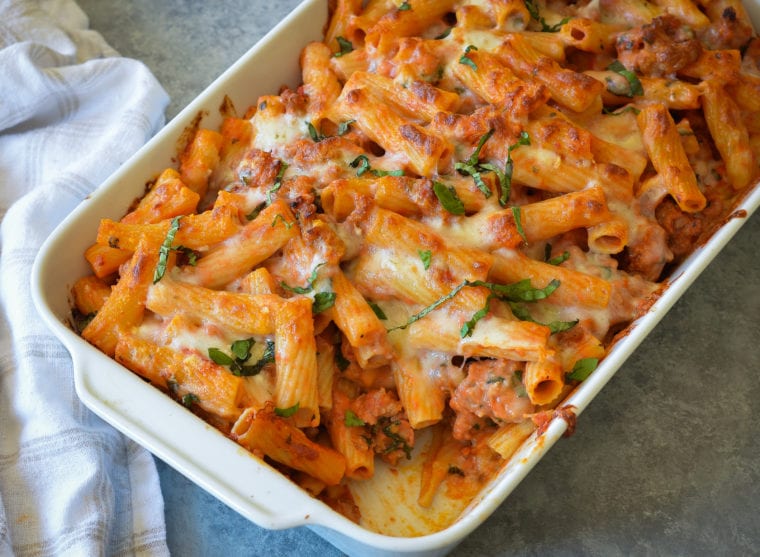
Baked Ziti with Sausage

Servings: 8
Preheat: 425
Prep Time: 1 hour
Source: https://www.onceuponachef.com/recipes/baked-ziti-with-sausage.html

This dish is a MAJOR family pleaser. It’s similar to meat lasagna but without the fuss, easy enough for a weeknight but also special enough for company, and it makes a great prep-ahead potluck dish.

Ricotta cheese is a traditional addition to baked ziti, but I leave it out because it has a tendency to get dry and grainy when baked. I use heavy cream to add richness instead. As for the mozzarella, I recommend buying whole milk mozzarella (the kind in plastic-wrapped bricks sold in the dairy case) and shredding it yourself. It has a somewhat rubbery texture that’s easy to shred and melts beautifully. Pre-shredded mozzarella is tossed with anti-caking agents, so it doesn’t melt as nicely. And fresh mozzarella is best suited for salads, as it doesn’t melt well. Finally, many grocers sell bulk Italian sausage, which is simply ground sausage without the casings. If you can’t find it, you can ask your butcher to take the meat out of the casings or do it yourself.

Make Ahead: This dish can be assembled and refrigerated, covered, up to 2 days in advance. Since the dish will be cold, the baking time will need to be increased. To bake, cover tightly with aluminum foil and place in a 425°F oven for 25 minutes, then uncover and bake for another 10 to 15 minutes, or until the cheese is lightly browned and the pasta is hot throughout.

Freezer-Friendly Instructions: The dish can be frozen unbaked. When you’re ready to cook it, defrost in the refrigerator for 24 hours, then proceed with the Make Ahead instructions above.

Ingredients: 

1 lb ziti noodles
1.5 lbs ground spicy or sweet Italian sausage (or removed from casings)
4 cloves garlic, minced
1 (28-oz) can crushed tomatoes
1 teaspoon salt
1-1/2 teaspoons sugar
1/4 teaspoon crushed red pepper flakes
1 cup heavy cream
1/2 cup grated Pecorino Romano (or Parmigiano Reggiano) cheese
1/3 cup chopped fresh basil, plus more for serving
8 oz whole milk mozzarella cheese, shredded (about 2 cups)

Directions: 

Bring a large pot of salted water to a boil. Cook the ziti according to the package directions for very al dente, about 7 minutes. (It will continue to cook in the oven so you want to under cook it just a bit.) Drain and add the pasta back to the pot. Set aside.

Preheat the oven to 425°F and set the oven rack in the middle position.
Heat a large sauté pan (preferably nonstick) over medium-high heat. Crumble the sausage into the pan and cook, breaking apart with a wooden spoon, until lightly browned and just cooked through, 5 to 6 minutes. Use a slotted spoon to transfer the cooked sausage to a plate. Drain all but 1 tablespoon of the fat from the pan and set over low heat (if you don’t have enough fat in the pan, add a tablespoon of olive oil). Add the garlic and cook, stirring constantly with a wooden spoon, until soft but not browned, about 1 minute. Add the crushed tomatoes, salt, sugar and red pepper flakes and simmer, uncovered, for 10 minutes.

Add the heavy cream, 1/3 cup of the Pecorino Romano, cooked sausage, and basil to the pan; stir until evenly combined. Carefully pour the contents of the sauté pan into the large pot with the pasta and gently stir to combine. Spoon half of the mixture into a 9 x 13-inch baking dish. Sprinkle with half of the shredded mozzarella and half of the remaining Pecorino Romano. Spoon the remaining pasta mixture on top and sprinkle with the remaining mozzarella and Pecorino Romano. Transfer to the oven and bake, uncovered, until the cheese has melted and browned, 15 to 20 minutes. Sprinkle with more basil and serve.

Shrimp Creole

Servings: 4
Preheat: 0
Prep Time: 1 hour
Source: Adapted from the 1975 edition of the New Orleans Cookbook Paperback by Rima and Richard Collin

Ingredients: 

2/3 C oil
1/2 C flour
1 3/4 thinly sliced scallions
1/3 C celery
1 C onion, chopped
1/2 C chopped green pepper
4 tsp minced garlic
3 Tbs parsley
16 oz can Italian style whole peeled tomatoes, drained
8 oz can tomato sauce
1 Tbs chives
4 Tbs dry red wine
4 bay leaves
6 whole allspice
2 whole cloves
2 tsp salt
3/4 tsp pepper
1/2 tsp cayenne
1/4 tsp chili
1/4 tsp mace
1/4 tsp dried basil
1/2 tsp dried thyme
4 tsp lemon juice
2 C water
2 lb raw shrimp, cleaned

Cooked rice

Directions: 

In a 6-8 quart pot, heat the oil and gradually add the flour, stirring constantly. Continue stirring over low heat until the roux is medium brown or the color of peanut butter. Remove from the heat. Add the fresh vegetables and parsley to the roux, mix well, reduce heat to low, and cook, stirring constantly until the vegetables begin to brown. Mix in the canned tomatoes and sauce, chives, wine, seasonings, and lemon juice.

Raise the heat and bring to a low boil. Add water and bring to a boil again, mixing thoroughly. Simmer for approximately 45 minutes. Add the shrimp and allow to come to a low boil again, then cover, reduce heat, and simmer for another 20 minutes (seems excessive to me). Remove pot from the heat and allow to stand 10 minute prior to serving. Serve with rice.

Chicken Jumbalaya

Servings: 6
Preheat: 0
Prep Time: 2 hours
Source: Adapted from the 1975 edition of the New Orleans Cookbook Paperback by Rima and Richard Collin

Ingredients: 

2 Tbs oil
1 fryer (3-4 lb). Cut up thighs in two, breast halves into 4, and remove small winglet
4 C chopped onio
3/4 C chopped green pepper
3/4 C thingly sliced scallion tops
1 Tbs finely minced garlic
3 Tbs parsley, chopped
1/2 C ham, cut into 1/2-inch cubes
1 lb pork, cut into 1/2-inch cubes
6 Creole/Andouille sausage, sliced into 1/2-inch disks
1 1/2 tsp table salt
1/2 tsp ground pepper
1/2 tsp chili powder
2 who bay leaves, crushed
1/4 tsp dried thyme
1/8 tsp ground cloves
1/8 tsp fresh grated nutmeg
1 1/2 C long grain rice
2 1/4 C water

Directions: 

Heat oil in a 7-8 quart pot at high temperature. Brown the chicken parts on all sides. Remove from pot, leaving oil behind.

Saute vegetables, parsley, ham, and pork in pot. Reduce heat to medium and cook, stirring frequently for approximately 15 minutes until the vegetables are softened, and perhaps browned.

Add the sausage and seasoning and continue cooking for 5 minutes, then add in browned chicken pieces, rice, and water. Mix gently.

Raise the heat to high and bring to a boil. Cover pot and reduce heat to very low. Cook for approximately 45 minutes with cover on, stirring occasionally, until rice is cooked. Uncover the pot during the last 10 minutes of cooking and raise heat to medium. Stir gently as rice dries out.

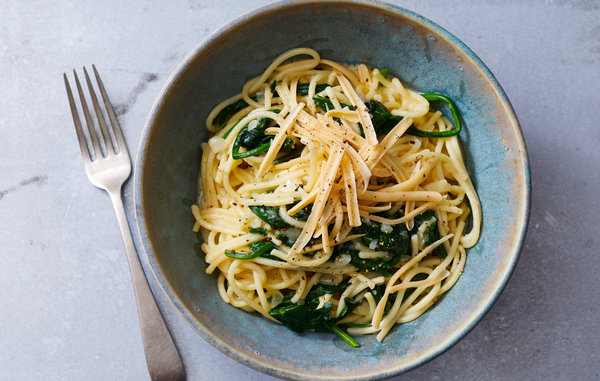
Vegetarian Carbonara With Spinach

Servings: 4
Preheat: 0
Prep Time: 30 minutes
Source: https://cooking.nytimes.com/recipes/1019816-vegetarian-carbonara-with-spinach?utm_source

This spinach-laden carbonara deviates from the standard by nixing two of its leading ingredients: custardy egg yolks, which create its silky texture, and cured meat, which delivers its salty punch. This egg-free version uses a combination of butter and starchy pasta cooking water to give the sauce body. A sprinkle of grated smoked Provolone or Gouda adds a bit of the earthy flavor that traditionally comes from guanciale or pancetta. The final coup? Adding greens: One entire pound of baby spinach may look like a gargantuan amount, but it wilts right into the pasta. Most importantly, don’t be shy with the black pepper: It adds a necessary dose of spice and heat.

Ingredients: 

3 tablespoons extra-virgin olive oil
1 cup finely chopped onion
5 cloves garlic, thinly sliced
1 pound spaghetti
Salt and pepper
2 tablespoons unsalted butter
1 pound fresh baby spinach
Red-pepper flakes, to taste (optional)
¾ cup grated Parmesan (2 1/2 ounces)
1 tablespoon fresh lemon juice
½ cup grated smoked Provolone or Gouda (1 1/2 ounces)

Directions: 

Heat the oil in a large nonstick skillet over medium heat. Add the onion and garlic and cook, stirring occasionally, until light golden, about 5 minutes.

Meanwhile, cook the pasta in a pot of salted boiling water until al dente. Reserve 2 cups cooking water and drain the pasta. Return the pasta and reserved cooking water to the pot and heat over low. Add the butter and onion-garlic mixture and cook, stirring constantly, until most of the liquid is absorbed and sauce is slightly thickened, 3 to 5 minutes. Add the spinach, season with salt, plenty of pepper and red-pepper flakes, if using, and stir until spinach is wilted. Stir in the Parmesan and lemon juice; season with salt and pepper.

Divide the pasta among 4 bowls and top each with 2 tablespoons smoked cheese. Finish with more black pepper, if desired.

Pasta Puttanesca

Servings: 4
Preheat: 
Prep Time: 30 minutes
Source: https://www.davidlebovitz.com/recipe/pasta-puttanesca-recipe/

Use canned plum tomatoes if you can. Fresh tomatoes don’t lend the same flavor to this pasta. To get them to the right consistency for the tomato puree called for in the recipe, remove them from the can and crush them with a fork or by hand. Also note that the sliced garlic is added to the oil cold. If you add minced garlic to hot oil, it can burn very quickly.I always rinse capers, whether they are salt-packed or in brine. Then I squeeze them dry before using them. The brine has particular flavor that, to me, distracts from the capers. If using salt-packed anchovies, those should be rinsed as well. Anchovies packed in oil don’t need to be rinsed.You can start the pasta before you begin making the sauce, although if making this for the first time, it’s probably easier to make the sauce, set it aside, then rewarm it again before adding the warm pasta and a bit of the pasta water, until you get the rhythm down. Make sure to reserve some of the pasta water to finish the pasta in the tangy tomato sauce.

Ingredients: 

2-3 tablespoons extra-virgin olive oil
6 cloves garlic, peeled and thinly sliced
5-6 anchovy filets, minced
3 tablespoons capers, coarsely chopped
1/4 teaspoon red pepper flakes
1/3 cup (40g) chopped, pitted black olives, preferably oil cured
1 3/4 cups (14oz can, 390g) tomato puree (see headnote)
1 1/2 tablespoons tomato paste
7 ounces (200g) dried pasta

Directions: 

1. Make the sauce by putting the olive oil, garlic, and minced anchovies in a large, wide skillet. Heat the pan over medium heat, cooking the garlic and anchovies, stirring frequently, until the garlic is lightly browned and the anchovies are very soft and almost melting, about 2 minutes.Meanwhile, heat a large pot of water to cook the pasta in.
2. Add the olives, capers, and red pepper flakes to the skillet, and stir for a minute, then add the tomatoes and tomato paste. Continue to cook, and stir, until the sauce is a deeper red color and the consistency of warm jam, which will take a couple of minutes. You want it wet and loose, but not watery. Remove from heat and set aside.
3. When the pasta water is boiling, add the pasta and cook it until it’s al dente. Just before the pasta is ready, rewarm the sauce. Drain the pasta, reserving some of the water, and add the pasta to the sauce warming in the pan, as well as 1 to 2 tablespoons of the reserved pasta water, stirring until the sauce coats the pasta and everything is heated through.

Serving: The pasta doesn’t really need any accompaniment so I don’t serve it with cheese or another else on top.

Storage: The sauce can be made 2-3 days in advance and refrigerated.

Variations: Some people add a bit of fresh, chopped parsley to the sauce, or dried oregano. I don’t, but you’re welcome to.

Chicken with Mustard

Servings: 4 to 6
Preheat: 
Prep Time: 1 hour
Source: My Paris Kitchen by David Lebovitz

This one-pan meal is a perfect fit for your largest, most extravagant pot. This dish requires you to brown the thighs and legs. Unless you have a very large skillet or a Dutch oven, fry the chicken in batches—you want them to have room to brown, not steam, which overcrowding creates. This dish is best served with a tangle of Herbed fresh pasta, which is exactly the right vehicle for sopping up the delicious sauce, or celery root puree.

Ingredients: 

½ cup (135g), plus 3 tablespoons Dijon mustard
¼ teaspoon sweet or smoked paprika
Freshly ground black pepper
¾ teaspoon sea salt or kosher salt
4 chicken thighs and 4 legs (8 pieces, total)
1 cup (100g) diced smoked thick-cut bacon
1 small onion, peeled and finely diced
1 teaspoon fresh thyme leaves, or ½ teaspoon dried
1 cup (250ml) white wine
1 tablespoon whole mustard seeds or grainy mustard
2 to 3 tablespoons crème fraîche (page 327) or heavy cream
Warm water (optional)
Chopped fresh flat-leaf parsley or chives, for garnish

Directions: 

Mix ½ cup (135g) of the Dijon mustard in a bowl with the paprika, a few generous grinds of the pepper mill, and the salt. Toss the chicken pieces in the mustard mixture, lifting the skin and rubbing some of it underneath.

Heat a wide skillet with a cover or a Dutch oven over medium-high heat and add the bacon. Cook the bacon, stirring frequently, until it’s cooked through and just starting to brown. Remove the bacon from the pan and drain on paper towels. Leave about 1 tablespoon of bacon fat in the pan, discarding the rest. Add the onion and cook for about 5 minutes, until soft and translucent. Stir in the thyme, and let cook for another few minutes, and then scrape the cooked onion into a bowl.

Add a little bit of olive oil to the pan, if necessary, and place the chicken pieces in the pan in a single layer. (If they don’t all fit, cook them in two batches.) Cook over medium-high heat, browning them well on one side, then flip them over and brown them on the other side. It’s important to get the chicken nicely colored as the coloring—as well as the darkened bits on the bottom of the pan, called the fond—will give the finished sauce its delicious flavor.

Remove the chicken pieces and put them in the bowl with the onions. Add the wine to the hot pan, scraping the darkened bits off the bottom with a sturdy flat utensil. Return the chicken pieces to the pan along with the bacon and onions. Cover and cook over low to medium heat, turning the chicken in the sauce a few times during cooking, until the chicken is cooked through, about 15 minutes. Check doneness by sticking a knife into the meat next to the thigh bone; if it’s red, continue cooking for a few more minutes.

Remove the pot from the heat and stir in the 3 tablespoons Dijon mustard, the mustard seeds, and the crème fraîche. If the sauce has reduced and is quite thick, you can thin it with a little warm water. Sprinkle chopped parsley over the top and serve.

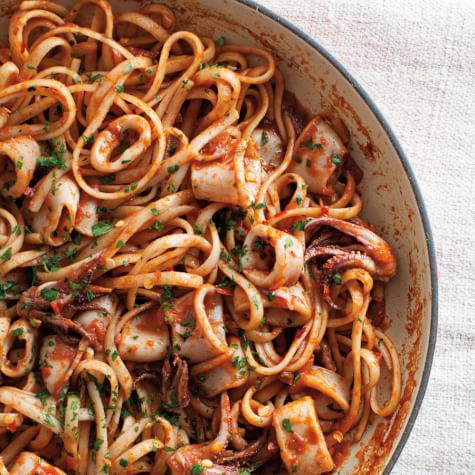
Spicy Tomato and Squid Pasta

Servings: 2 (recipe says 4, but it probably isn’t enough for 1 lb pasta)
Preheat: 0
Prep Time: 45 min
Source: https://www.williams-sonoma.com/recipe/spicy-tomato-and-squid-pasta.html

I altered this recipe, and cooked the squid for 30 minutes *in the sauce*, so the flavor is preserved and it gets soft.

Note, there are variations on this at
https://www.williams-sonoma.com/recipe/calamari-fra-diavolo.html
and
https://www.williams-sonoma.com/recipe/linguine-with-spicy-calamari.html

Ingredients: 

3 Tbs. olive oil
1 small yellow onion, finely chopped
3 garlic cloves, minced
1/4 tsp. red pepper flakes
2 Tbs. minced fresh flat-leaf parsley
1/4 tsp. anchovy paste or one filet
1 can (14.5 oz.) crushed tomatoes with juice
Salt, to taste, plus 2 Tbs.
Freshly ground black pepper, to taste
1 lb. gemelli, fusilli or other spiral-shaped pasta
1 lb. cleaned squid, bodies cut into strips or rings

Directions: 

In a large fry pan over medium-low heat, warm the oil. Add the onion and sauté for 2 minutes. Add the garlic, red pepper flakes and 1 Tbs. of the parsley, and cook, stirring frequently, until the onion starts to color but not brown, about 30 seconds. Stir in the anchovy paste or filet and tomatoes and sauté until slightly thickened, 2 to 3 minutes. Season the sauce with salt and black pepper. Add squid and simmer for 30 minutes.

Gwyneth’s Chicken Burgers, Thai Style

Servings: 4
Preheat: 0
Prep Time: 15 minutes
Source: People Magazine, April 24, 2013

Ingredients: 

1 1b. ground chicken (preferably dark meat)
2 garlic cloves, very finely minced
½ cup cilantro, finely chopped
2 shallots, very finely minced
1 tsp. very finely minced red pepper, or red chili if you like it hot
2 tsp. fish sauce
½ tsp. coarse sea salt
1 tsp. freshly ground black pepper
2 tbsp. canola, grapeseed or safflower oil

Directions: 

1. Thoroughly mix the chicken with the garlic, cilantro, shallots, red chili, fish sauce, salt, and pepper. Form the mixture into 4 burgers, each about ¾-inch thick.

2. Heat a grill or grill pan over medium heat. Rub each burger on both sides with a bit of oil and grill for about 8 minutes on the first side and another 5 minutes on the second, or until nicely marked and firm to the touch.

Neapolitan-Style Pizza Crust

Servings: 2 16″ pizzas or 4 12″ pizzas
Preheat: 550
Prep Time: 12 hours rising. 20 minutes topping prep. 30 minutes baking
Source: https://www.kingarthurbaking.com/recipes/neapolitan-style-pizza-crust-recipe

Recipe is doubled from King Arthur amounts. Makes two 14″ pizzas.

Start first thing in the morning for making pizza for dinner. A 12-hour rise is sufficient. The yeast will be exhausted if left to rise 24 hours.

For a shorter-rise version of this recipe, proceed as follows: Increase the yeast to 1 teaspoon. After mixing the ingredients into a rough but cohesive dough, cover and let rest for 20 to 30 minutes. After this rest, grasp one edge of the dough, pull it up and out, and tuck it into the center. Give the bowl a quarter turn and repeat three more times, until you’ve gone all the way around. Cover and allow the dough to rise at room temperature for at least 8 hours; this can be done before leaving for work. When you’re ready to bake pizza, follow the recipe above starting with preheating the oven and then dividing the dough in half.

Ingredients: 

4 cups (464g) King Arthur ‘00’ Pizza Flour
1/4 teaspoon instant yeast or active dry yeast
1 teaspoon granulated sugar
2 1/2 teaspoons (16g) table salt
1 1/2 cup (340g) water, lukewarm, (105° to 115°F)

Directions: 

Sprinkle yeast on top of water and let dissolve. In a medium bowl, mix the flour, sugar, and salt, then add the water with dissolved yeast. Stir until just combined, making a rough but cohesive dough. Cover the bowl and allow the dough to rise at room temperature overnight, for at least 12 hours and up to 24 hours.

Set pizza stone 8-10″ from broiler. Preheat oven to 550F with pizza stone 45 minutes in advance. Turn on broiler about 10 minutes before shaping pizza dough.

To shape the dough: Divide the dough in half (about 400g per piece). Working with one piece at a time, transfer the dough to a well-floured surface. Stretch and fold it, as follows: holding onto the dough at both ends, pull one end away from the other, then fold it back onto itself. Repeat on the other side. The dough will likely be sticky — don’t worry about it looking neat as you fold. Be sure to keep your hands floured as you work. Repeat this process on the other side of the dough, so that all four corners of the dough have been stretched and folded. Next, pull the ends of the dough towards the middle, then turn it over. Using your fingers, pull the dough under itself to make a smooth, round ball with the seams tucked into the bottom. Repeat with the second piece of dough, and place each ball seam-side down into a floured bowl. Cover the bowls and allow the dough to rise for 45 minutes to an hour, while your oven preheats.

Generously flour a wooden peel, rubbing flour into the board to completely coat.

Scoop the risen dough onto a well-floured work surface seam-side down (a bowl scraper is helpful here), using care to shape it as round as possible for easier stretching. If the dough feels wet, use a generous dusting of flour on top. For dough that feels drier, use slightly less flour. Use your fingertips to gently depress the dough, being careful not to touch the outer edge of the crust. This step is important — leaving the circumference untouched at this stage will result in a beautiful bubbly outer crust post-bake. Again, using care to not touch the outermost edge of the crust, lift the pizza from the work surface and use your knuckles to gently stretch the dough into a 14″ circle. If the dough is at all sticky, use more flour. Use two hands at once to gently move the dough in a circle, allowing gravity to perform the stretch. Let gravity do most of the work for you, as pulling will stretch the center more than the edges. If you find your dough is difficult to stretch, set it down on a floured surface for 5 to 10 minutes to allow the gluten to relax.

Move the dough to the floured peel and adjust it so none is hanging off the edge. Remember — if the dough is sticky when you put it on the peel, it will stick to the peel! Make sure it’s well-floured. Lightly sauce the dough, then top with the cheese of your choice. Add additional toppings as desired.

Jiggle the uncooked pizza back and forth until it moves easily on the peel.

Turn off broiler and turn oven on again to 550. Slide pizza from peel on to stone and bake for 5 minutes.

Turn on broiler again and broil for about 1-2 minutes until cheese is melted, the crust is golden, and there are spots of char. Remove from oven and add any fresh greens like arugula, basil, lox, etc.

If you are going to make a second pizza, slide stone out of oven and wipe off burned flour and cheese, return to oven, and reheat stone surface under a broiler for a few minutes.